 English

 Slovak
 Czech
Czech
 Hungarian
 Italian
 Polish
 Slovenian





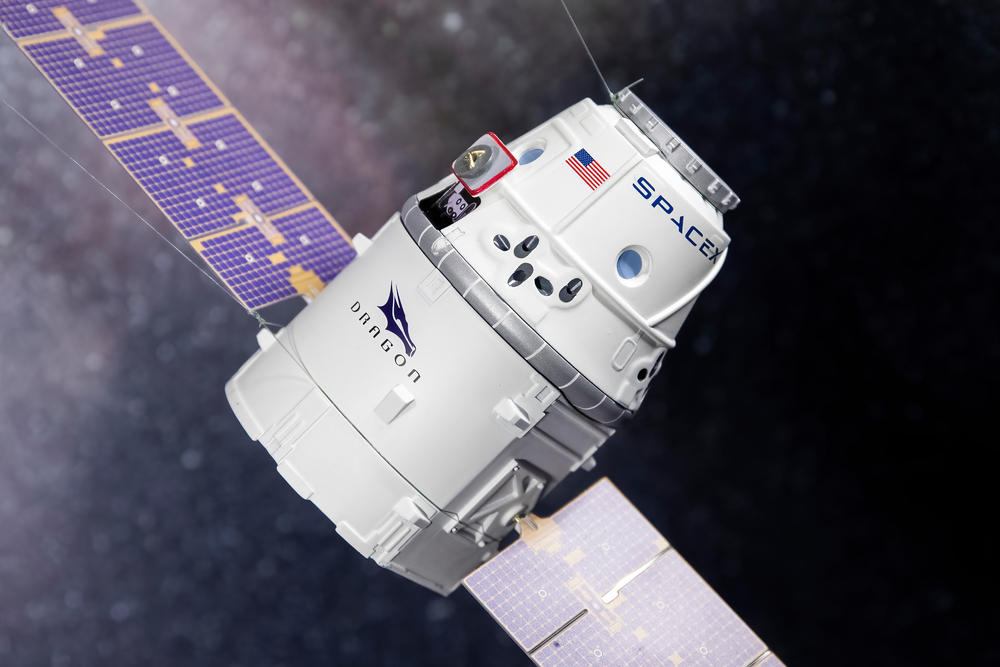
Institutional investor interest in SpaceX is already substantial. Ron Baron of Baron Capital has repeatedly stated that approximately a quarter of his personal wealth is invested in SpaceX, with the company also representing one of the largest positions in his Baron Partners fund. SpaceX also plays a significant role in the portfolio of ARK Investment Management’s venture capital fund led by Cathie Wood. Based on this long-term interest, it can be concluded that the IPO will not merely be a short-term market event, but rather the culmination of already strong and sustained investor demand.
Dominance
The core pillar of SpaceX’s fundamental value is its dominant position in low Earth orbit (LEO). The company confirms its leadership through key performance metrics and a rapidly growing pace of launches and satellite network expansion. In the most recent quarter alone, the company carried out nearly a thousand launches, representing a year-over-year increase of 70%. From a longer-term perspective, SpaceX launched more than 3,200 satellites in 2025, further underscoring its technological lead and ability to scale infrastructure faster than competitors. Rival projects, including initiatives by Amazon, are progressing, but have so far failed to match SpaceX’s pace.
Space and AI
SpaceX is increasingly being mentioned not only as a space or telecommunications company, but also as a potential infrastructure player for the era of artificial intelligence. Rising demand for computing power, constraints on Earth’s energy resources, and the need for global connectivity are opening discussions around space-based data centers. SpaceX is uniquely positioned to potentially implement such a model in the future, which would significantly expand the total addressable market of the entire LEO segment. Moreover, interest from technology giants such as Google and OpenAI suggests that this is not merely a theoretical concept, but a seriously considered long-term vision.
Technical Challenges and Long-Term Potential
Such expansion naturally brings significant technical challenges. However, Deutsche Bank analyst Edison Yu notes that these are more engineering limitations than physical ones, meaning their resolution is a matter of time, investment, and technological progress. SpaceX’s ability to systematically push the boundaries of what is possible is one of the reasons investors value the company far more highly than traditional aerospace and defense firms.
Contrast with Tesla
SpaceX’s planned IPO comes at a time when Elon Musk’s other assets are experiencing mixed performance. Tesla reported weaker-than-expected deliveries and, for the first time, lost its position as the world’s largest electric vehicle manufacturer to BYD. For this reason, SpaceX’s IPO could be a pivotal moment that redirects investor attention back to Musk’s ambitious long-term projects and may also influence his personal wealth.
Investment Conclusion
SpaceX’s stock market debut would not merely be another technology IPO, but potentially a turning point for capital markets. The combination of a dominant position in LEO, the growing importance of space infrastructure for AI, and strong confidence from major investors creates a narrative that goes beyond traditional sector boundaries. For investors, a SpaceX IPO would represent a unique opportunity to participate in a company that is not merely refining existing technologies, but redefining the very architecture of the global digital economy.
[1] Forward-looking statements represent assumptions and current expectations that may not be accurate or may be based on the current economic environment, which may change. These statements do not guarantee future performance. By their nature, they involve risks and uncertainties, as they relate to future events and circumstances that cannot be predicted, and actual developments and results may differ materially from those expressed or implied in any forward-looking statements.
Disclaimer! This marketing material is not and must not be understood as investment advice. Data relating to the past are not a guarantee of future returns. Investing in foreign currencies may affect returns due to exchange rate fluctuations. All securities transactions may result in both profits and losses. Forward-looking statements represent assumptions and current expectations that may not be accurate or may be based on the current economic environment, which may change. These statements do not guarantee future performance. InvestingFox is a trading brand of CAPITAL MARKETS, o.c.p., a.s., regulated by the National Bank of Slovakia.
Sources:
https://www.cnbc.com/2026/01/02/spacex-ipo-musk-2026.html
https://www.cnbc.com/2019/12/10/saudi-aramco-ipo-mohamed-el-erian-is-a-firm-yes-on-buying-shares.html
https://www.cnbc.com/2025/12/15/spacex-may-be-the-biggest-ipo-ever-next-year-how-to-play-it-right-now.html
https://www.cnbc.com/2026/01/02/chinas-byd-to-overtake-tesla-as-worlds-top-ev-seller-for-first-time.html