 English

 Slovak
 Czech
Czech
 Hungarian
 Italian
 Polish
 Slovenian





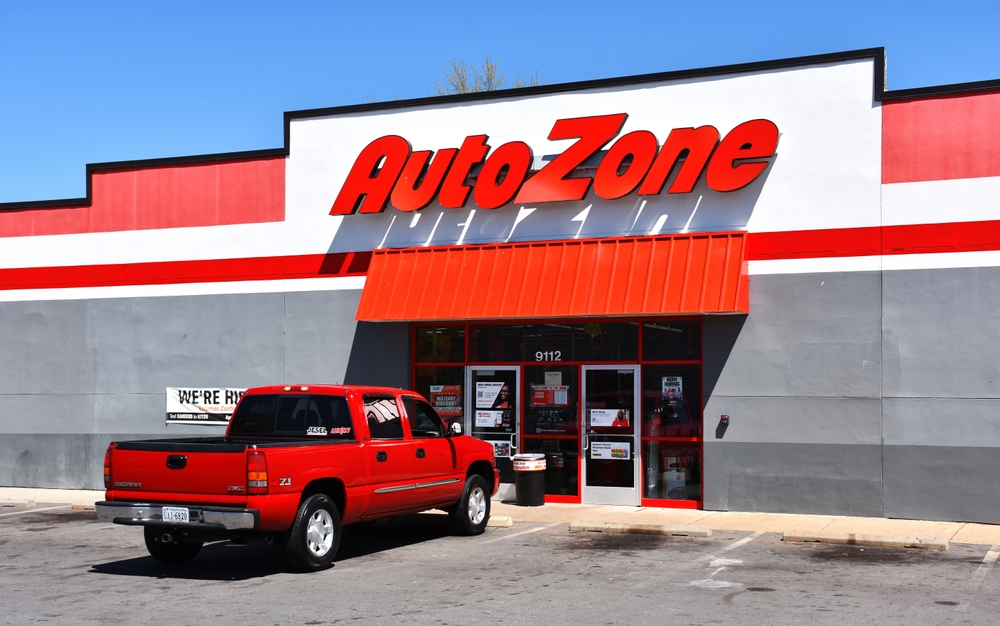
Earnings beat expectations, revenue less so
AutoZone generated revenue of $6.59 billion in the fourth quarter of fiscal year 2026, representing year-over-year growth of 5.6%. Net income rose from $837 million to $931.6 million, and operating income increased by 10.1% to approximately $1.32 billion. The most striking figure was earnings per share of $56.05, compared to $48.71 a year ago. Wall Street had expected approximately $54.08 per share, so in terms of final profitability, the company pleasantly surprised the market.
On the revenue front, the picture was less convincing. Analysts had projected approximately $6.7 billion, and growth in comparable sales, excluding currency effects, reached only 1.5%, while market expectations hovered around 3.8%. Comparable domestic sales rose by 1.6%. The results thus show that AutoZone managed to increase profits significantly faster than sales themselves, but organic growth remains weaker than investors would like to see from this company.1
Margin jumped sharply, but was boosted by an unusual item
AutoZone’s gross margin reached 53.3% of revenue in the fourth quarter and increased by 182 basis points year-over-year. However, a significant portion of the improvement did not come from operations alone. Tariff refunds added approximately 145 basis points, and the positive year-over-year impact of LIFO inventory accounting accounted for another 105 basis points. The company received approximately $96 million in tariff refunds during the quarter, which significantly boosted the bottom line.1
On the other hand, operating expenses reached 33.4% of revenue, compared to 32.4% a year ago. AutoZone continues to invest heavily in new stores, distribution, technology, and expanding inventory availability, so part of the benefit from the higher gross margin was offset by rising costs. For the full fiscal year, the gross margin was actually slightly lower, falling from 52.6% to 52.3%. This suggests that the exceptionally strong margin in the last quarter cannot automatically be carried over into the next year.1
The commercial business is becoming the main driver of growth
The strongest component of the results was sales to professional customers, namely auto service centers, repair shops, and other commercial clients. Domestic commercial revenue in the fourth quarter rose by 8.6% to approximately $1.91 billion. For the full year, they increased by 10.6% to $5.76 billion. The commercial segment already accounted for approximately 29% of the company’s total quarterly revenue, and its growth rate significantly outpaced that of the retail segment of the business.1
An important part of the strategy is the Mega Hub stores, which carry more than 100,000 stock items and also supply other branches in the surrounding area. AutoZone ended the year with 172 such stores and opened another 16 in the fourth quarter alone. According to management, the approximately 2,000 commercial programs connected to the Mega Hub network generate, on average, 16% higher annual sales than the rest of the network. The company aims to increase the number of Mega Hubs to approximately 300 over the next three years.1
Weaker consumer demand is holding back the home repair segment
The retail segment for do-it-yourself car repair customers looked significantly weaker. Comparable sales in this part of the business in the U.S. fell by 0.6%. Although the average purchase value rose by approximately 5%, the price increase was not enough to fully offset the decline in the number of transactions. Management noted that customers are facing a significant rise in the cost of living and, among financially weaker households, are seeing both the postponement of repairs and a shift toward cheaper products.2
The problem is all the more pronounced precisely because the industry enjoys favorable conditions from a long-term perspective. The U.S. vehicle fleet is aging, and weaker sales of both new and used cars typically support demand for replacement parts. This time, however, inflation is partially offsetting this effect. AutoZone reported that the average purchase value in the DIY segment has increased by approximately 9% over the past two years, while foot traffic and the number of transactions remain under pressure. However, the trend began to improve toward the end of the quarter.2
Record expansion continues, with 2027 expected to bring an acceleration
AutoZone is also continuing one of the largest expansions in its history. In the fourth quarter, it opened 175 new stores, including 97 in the U.S., 68 in Mexico, and 10 in Brazil. A record 374 stores were added for the full year, and as of the end of August, the company had a total of 8,031 stores. Of these, 6,863 were in the U.S., 1,001 in Mexico, and 167 in Brazil. Revenue for the full fiscal year also rose by 7.4% to $20.34 billion.1
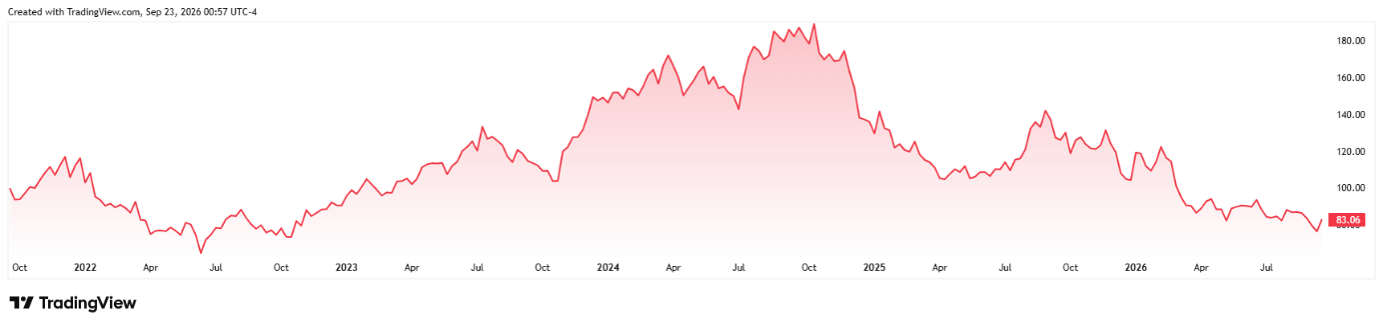
AutoZone’s stock price performance over the past five years*
Management expects growth to continue in fiscal year 2027, though disparities among the various segments of the business are expected to remain significant. Domestic comparable sales are expected to grow at a rate ranging from approximately zero to the low single digits, while commercial sales are projected to grow at a high single-digit to low double-digit rate. International comparable sales are expected to grow at a low to mid-single-digit rate on a constant currency basis. AutoZone plans to open approximately 400 new stores and focus the majority of its expansion on the U.S. and Mexico. For investors, the key question will be whether the commercial segment and new stores can sufficiently offset the more cautious behavior of ordinary U.S. customers and whether earnings growth will be sustained even without significant help from tariff refunds. [1]
[1] Forward-looking statements are based on assumptions and current expectations, which may be inaccurate, or on the current economic environment, which is subject to change. Such statements are not guarantees of future performance. They involve risks and other uncertainties that are difficult to predict. Actual results may differ materially from those expressed or implied in any forward-looking statements.
* Past performance is no guarantee of future returns.
[2] https://www.benzinga.com/news/26/09/61924911/transcript-autozone-q4-2026-earnings-conference-call