 English

 Slovak
 Czech
Czech
 Hungarian
 Italian
 Polish





AI as the Growth Engine
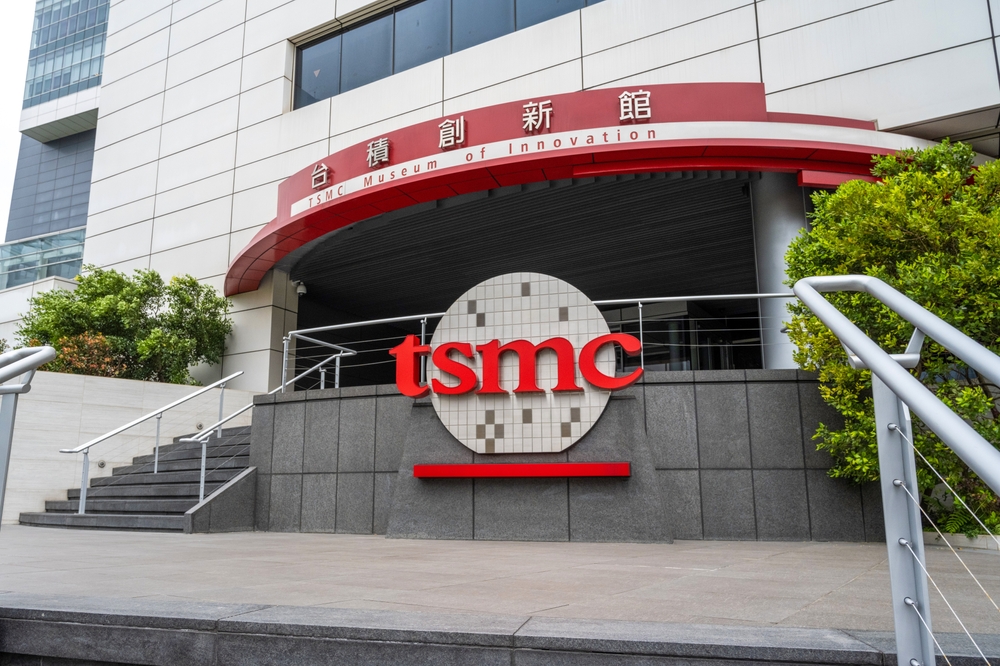
While traditional segments such as smartphones and automobiles are slowly stabilizing, the High-Performance Computing (HPC) division has taken the lead as the main driver of revenue growth. This segment, which includes chips for AI and 5G applications, ultimately accounted for as much as 57% of total revenue. TSMC produces the most advanced chips for giants like Nvidia and AMD, whose graphics processors form the foundation of the entire AI ecosystem. C.C. Wei, the company’s CEO, commented: “The development of the AI market remains very positive. Consumer adoption of AI models is driving demand for computing power and therefore for semiconductors.”
Technological Superiority
Within its product portfolio, TSMC is currently focusing its capacity mainly on manufacturing 3 nm, 4 nm, and 5 nm process nodes, which are among the most advanced in the world. As a result, 7 nm and smaller technologies account for up to 74% of total revenue. It is crucial to note that AI accelerators and premium smartphones rely heavily on 3 nm chips.
Investments in the Future
TSMC is also not slowing down on the expansion front. The company increased its capital expenditures to $40 billion, aimed primarily at expanding production capacity and strengthening its presence in the United States. This is a strategic move—both as a response to potential tariffs and as a signal that TSMC intends to maintain partnerships with key American technology giants.
Risks and Geopolitics
TSMC’s success does not come without challenges. Potential risks linked to semiconductor tariffs are emerging in the background. Wei admits that “the company is closely monitoring uncertainties and risks associated with the possible impact of tariffs, especially in segments sensitive to price changes.” Nevertheless, he remains optimistic, believing that TSMC can negotiate favourable exemptions.
Future Outlook
Analysts at Counterpoint Research view the results as evidence that TSMC continues to maintain a justified lead over competitors. With rising demand for computing power and the boom in artificial intelligence, TSMC appears to be on the brink of another expansion phase. Although it faces geopolitical challenges, its technological leadership, innovation capacity, and strategic investments keep it positioned as a global leader without which today’s AI revolution simply would not exist.
Sources:
https://pr.tsmc.com/english/news/3264
https://www.tsmc.com/english/dedicatedFoundry/technology/platform_HPC
Warning! This marketing material is not and must not be construed as investment advice. Data that relates to the past is not a guarantee of future returns. Investing in a foreign currency can affect returns due to fluctuations. All securities trades can result in both profits and losses. Forward-looking statements represent assumptions and current expectations that may not be accurate or are based on the current economic environment, which is subject to change. These statements do not guarantee future performance. InvestingFox is a trademark of CAPITAL MARKETS, o.c.p., a.s., regulated by the National Bank of Slovakia.