 English

 Slovak
 Czech
Czech
 Hungarian
 Italian
 Polish
 Slovenian





Next-Generation Smart Glasses
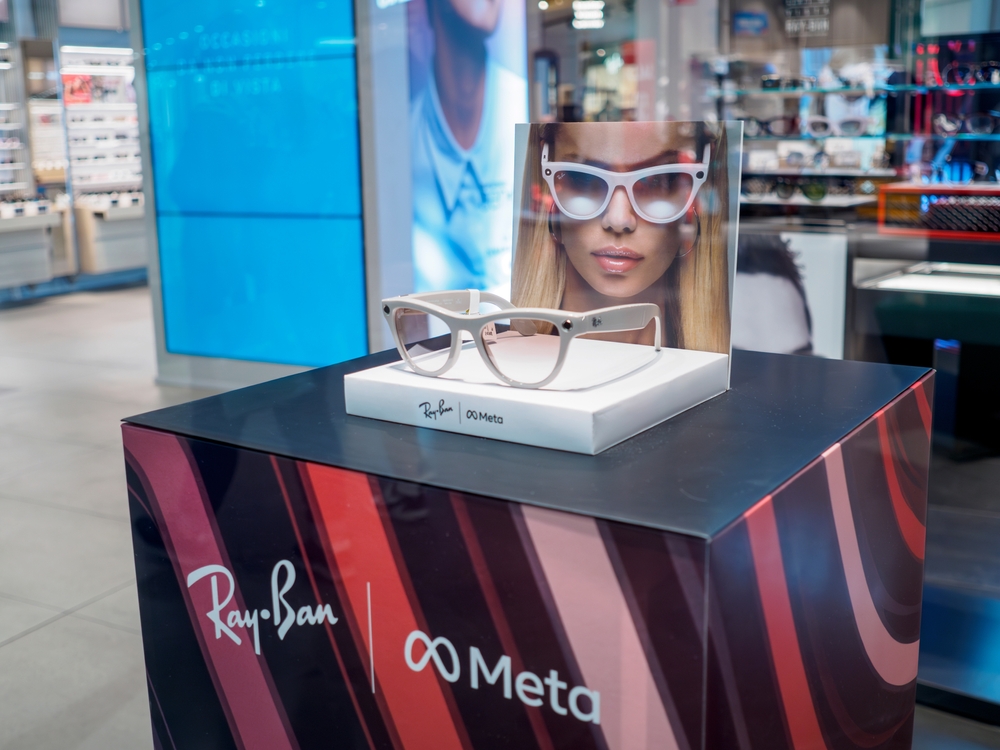
According to Bloomberg, the California-based company plans to introduce another version of the Ray-Ban Meta smart glasses this year. The premium model, called Hypernova, will not only allow users to launch applications using hand gestures but will also feature an improved camera. The key upgrades include a display similar to that of the Meta Quest headset and a neural controller named Orion Ceres. Due to these innovations, the glasses' price is expected to range between $1,000 and $1,400, significantly more than the base model, which costs just under $300. Reports suggest that the new glasses will hit the market by the end of this year, while a higher-end version, Hypernova 2, currently in development, could be available by 2027.
Continues to Bet on AR/VR
This launch would come two years after the release of the revamped Ray-Ban Meta model. The glasses have been a massive market success, with their manufacturer, EssilorLuxottica, reporting that 2 million units were sold between October 2023 and the end of 2024. The company has stated its goal of ramping up production to 10 million units annually by the end of next year. Meta is placing high hopes on this product, believing its popularity could attract customers to higher-priced models. Smart glasses are part of the AR/VR segment, which Meta has been aggressively promoting for years through its Reality Labs division. This is evident from the massive investments being poured into the sector, with $20 billion allocated this year alone—bringing the total to $100 billion over more than a decade. Despite Mark Zuckerberg’s strong belief in AR/VR's potential, investors and the market remain skeptical.
Meta is Growing, but Reality Labs Isn’t
The doubts surrounding Reality Labs stem from its long-term financial struggles. This division, which oversees Ray-Ban smart glasses and Quest headsets, has been operating at a loss since 2020. In the fourth quarter of 2024, the segment reported a record loss of $4.97 billion, bringing its total of over $17.7 billion—a nearly 10% year-over-year increase. Despite this, revenue for the final three months of 2024 rose to $1.1 billion, with full-year revenue reaching $2.1 billion.
While Reality Labs continues to struggle, Meta as a whole is thriving. According to earnings results released on January 29, 2025, Meta’s revenue surged to $48.39 billion, reflecting a 21% year-over-year increase. The company also saw robust EPS growth, with earnings per share (EPS) soaring 50% to just over $8. Looking ahead, Meta expects continued growth in Q1 2025, forecasting nearly $42 billion in revenue, which would mark a 15% increase year-over-year.[1]
Stock in the Green
When it comes to Meta’s stock, the tech giant has seen significant gains over the past five years, with the strongest growth occurring since fall 2022. Investor confidence was evident when Meta reached an all-time high of $736 in mid-February 2025. Despite a subsequent correction to $585 as of April 2, 2025, the stock remains up 11% year-over-year. For comparison, its value five years ago was just $225, meaning it has surged by an impressive 160% relative to its April 2025 levels.*
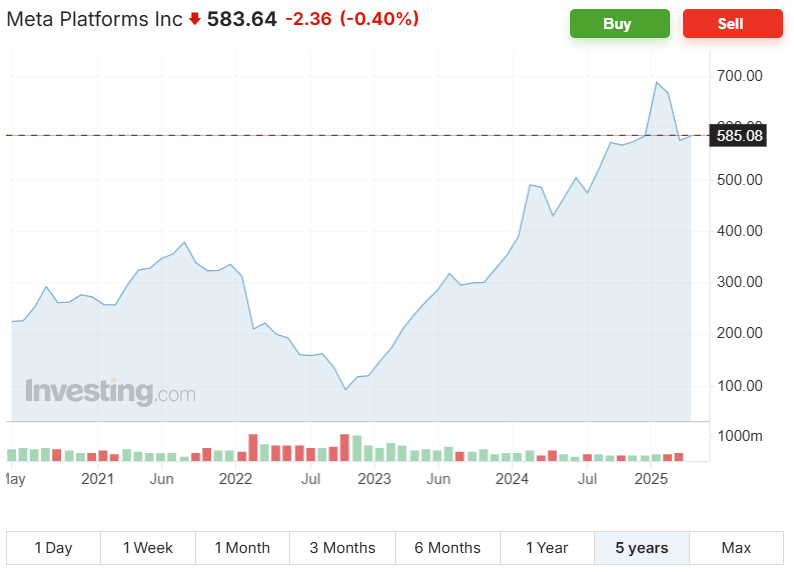
Source: Investing.com*
Conclusion
While Meta is thriving financially and continues to dominate the social media space, its loss-making Reality Labs segment remains a burden. The Ray-Ban smart glasses have proven there is significant interest among tech enthusiasts, and the company hopes to leverage this demand to drive interest in its premium products. However, it remains uncertain whether the new, more luxurious model will improve Reality Labs' situation and bring it into profitability.
*Past performance is not a guarantee of future returns.
[1] Forward-looking statements are assumptions and current expectations that may not be accurate or are based on the current economic environment, which may change. These statements are not guarantees of future performance. By their nature, forward-looking statements involve risk and uncertainty because they relate to future events and circumstances that cannot be predicted and actual developments and results may differ materially from those expressed or implied by any forward-looking statements.
Disclaimer: This marketing material is not and should not be construed as investment advice. Past performance is not a guarantee of future returns. Investing in foreign currencies may affect returns due to fluctuations. All transactions in securities can lead to both profits and losses. Forward-looking statements represent assumptions and current expectations, which may not be accurate or based on the current economic environment, which could change. These statements do not guarantee future performance. InvestingFox is a trademark of CAPITAL MARKETS, o.c.p., a.s., regulated by the National Bank of Slovakia.
Sources:
https://www.theverge.com/news/641153/meta-hypernova-ray-ban-smart-glasses-price
https://finance.yahoo.com/news/meta-pours-20-billion-ar-174032155.html