 English

 Slovak
 Czech
Czech
 Hungarian
 Italian
 Polish
 Slovenian





Expansion into Washington
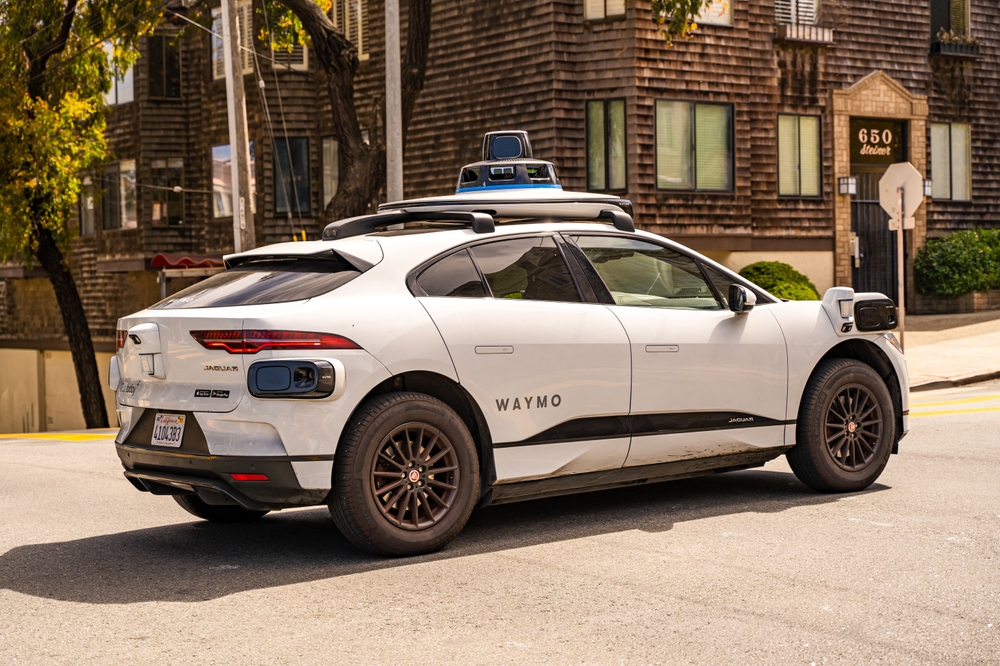
Waymo's move to provide its services in the U.S. capital is a significant step toward broader adoption of autonomous driving. From next year, residents will be able to summon white Waymo cars through the Waymo One app, as testing will continue throughout this year. These tests, which have been conducted in the city since January, are carried out in the presence of human drivers to ensure full safety and to properly set up the legislative framework that the city currently lacks. If Waymo manages to establish successful cooperation with lawmakers, it could open the door for more companies operating in this sector. A point in Waymo's favour is its collaboration with emergency services and the Governors Highway Safety Association, whose members include road safety authorities, during its service expansion. However, Washington is not the only city on Waymo's expansion list; the company is also planning to enter Miami and Atlanta in the near future.
Increasing Commercial Acceptance
These cities will complement other U.S. regions where Waymo's services have been available for a longer time. These include Phoenix, where the cars have been operating since 2020, as well as San Francisco, Los Angeles, and Austin, Texas, where the service is available in collaboration with the Uber platform. The company has also expanded outside the U.S., to Tokyo, where trial rides are underway. Additionally, it has initiated partnerships with manufacturers Geely and Hyundai. The growing popularity of Waymo's autonomous taxi rides is evidenced by the fact that the company completed approximately 4 million paid rides last year.
Competition Lags Behind
Alphabet’s subsidiary is positioned as a leader, partly because it is the only company in the U.S. offering services across such a wide range of cities. Another company involved in autonomous taxi services is Amazon’s Zoox. However, its services are not yet available to the public and are currently limited to test drives in three U.S. regions, though this is expected to change this year. General Motors, on the other hand, abandoned its robotaxi efforts back in 2023, and in December 2024, it completely shut down its subsidiary Cruise. Instead, GM has shifted its focus to personal autonomous vehicles, reallocating thousands of employees to other tech divisions. Tesla, the electric car manufacturer, also comes into play. However, compared to its competitors, it is still far from launching its autonomous vehicles. Although the company unveiled the Cybercab and Robovan last year, production is planned for the coming years, and their real-world implementation for public use remains a distant goal. Additionally, it is worth noting that Tesla’s CEO, Elon Musk, has been promising this technology since 2016.
Still Not Profitable
While Waymo is successfully integrating into everyday life and expanding its reach, it has yet to achieve profitability for its parent company. According to Alphabet’s financial results for Q4 2024, published on February 4, 2025, the Other Bets segment reported a deepened loss of over $1.18 billion. In comparison, the loss for the same period the previous year was $863 million. However, it should be noted that this segment includes multiple ventures under Alphabet’s umbrella.
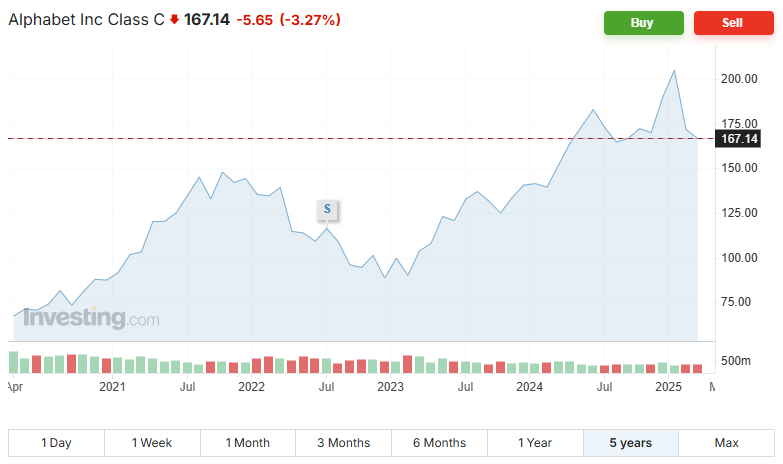
Source: Investing.com*
Challenges of Driverless Cars
Although autonomous driving is becoming increasingly commercialized, it is still a new technology that is not without challenges. According to Reuters, Waymo was investigated last year by the National Highway Traffic Safety Administration. The organization reported that Waymo’s vehicles violated laws and exhibited unusual behaviour, including collisions with visible objects that a human driver would have noticed. In response, Waymo has been working to prevent such incidents. Just last year, it recalled hundreds of its vehicles to update their software. As reported by Reuters, based on over 80 million kilometres driven, Waymo found that its vehicles caused 81% fewer accidents compared to the average human driver.
Conclusion
The expansion of Waymo is undoubtedly a significant step toward broader adoption, especially in the case of the nation’s capital, which houses many lawmakers. If the company can convince both the public and regulators of the technology’s safety, it will benefit the entire tech sector. Moreover, with technological advancements and a lack of competition, Waymo could further strengthen its position in the U.S. market. Time will tell if it can also achieve profitability for its parent company, Alphabet.
* Past performance data is not a guarantee of future returns.
Warning! This marketing material is not and should not be considered investment advice. Past performance data is not a guarantee of future returns. Investing in foreign currency may impact returns due to exchange rate fluctuations. All securities trading can result in both profits and losses. Forward-looking statements represent assumptions and current expectations, which may not be accurate or are based on the current economic environment that may change. These statements do not guarantee future performance. InvestingFox is a trademark of CAPITAL MARKETS, o.c.p., a.s., regulated by the National Bank of Slovakia.
Sources:
https://www.cnbc.com/2025/03/25/waymo-will-launch-washington-dc-robotaxi-service-in-2026.html
https://abc.xyz/assets/a3/91/6d1950c148fa84c7d699abe05284/2024q4-alphabet-earnings-release.pdf