 English

 Slovak
 Czech
Czech
 Hungarian
 Italian
 Polish
 Slovenian





Numbers to focus on
Of course, quarterly results cannot do without an evaluation of basic fundamental parameters. The giant's revenue came in at $63.21 billion, beating Wall Street estimates of $63.19 and surpassing the same period last year's $58.52 billion. After deducting all expenses, net profit of $1.90 billion can be found in the earnings list, which is also higher than last year's value of $1.68 billion. The related indicator, earnings per share (EPS), also enjoyed growth, rising to $4.28 from estimates.
What does the company owe to its stable results? In addition to the company's traditional business segments, e-commerce revenues gained attention on their side, growing by a significant 16% year-on-year. This percentage proves that the company is managing to go through digital transformation without the need to take drastic steps, which is undoubtedly positive news.
A tool against sharply falling titles
The aforementioned strong fundamentals of the company have long been reflected in the development of the share price itself. For example, if you own Tesla stock, you faced a decline of almost 60% at the beginning of the year1. In comparison, Costco managed this correction with a drop of only 18%. This is therefore a model example for investors who do not expect hundreds of times profits from their investments in a few months, in exchange for long-term and, above all, stable growth.*
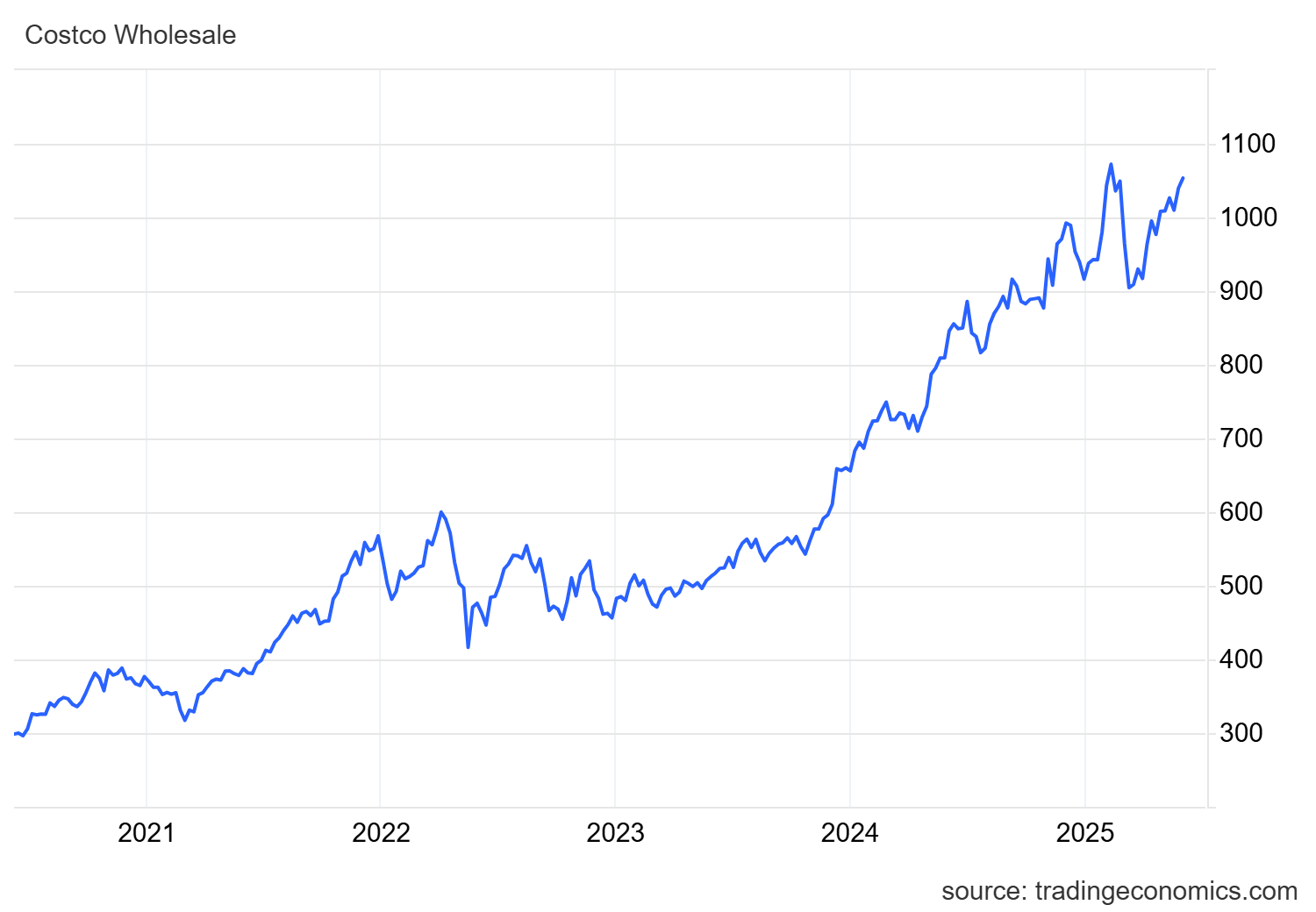
Source: Trading Economics*
Costco and changes in U.S. Customs Policy
Comparatively interesting as quarterly numbers are the steps Costco has taken to mitigate the impact of tariff adjustments for U.S. partners. Don't expect a dramatic price increase in the first place. Unlike its competitors, the company has decided that even in crisis situations, it wants to keep its vision of affordable prices, which is more complex planning, but in the end it may be a transfer of customers to Costco.
The company accelerated supplies even before the introduction of new levels of tariffs, redirected supplies from countries with higher customs burdens, and at the same time strengthened its own Kirkland Signature brand in regions with more promising conditions for growth. Gary Millerchip also pointed out on the conference call that imported goods from other countries account for a third of sales, of which only 8% are from China.
Prices policy
As we have already mentioned, instead of a blanket price increase, Costco prefers a differentiated pricing policy. The company has divided the assortment into two key groups. Essential products and complementary ones. In general, staple foods such as butter, eggs and bananas remain affordable, while products such as flowers from Latin America have risen in price to some extent.
Conclusion
During the current situation on the capital market, Costco is a textbook example of how geopolitical and customs challenges can be effectively handled, which also indicates a possible shift of customers from competitors in the future. In addition to logistical changes, the company also recorded steadily growing quarterly results, which go hand in hand with the development of the share price of this player in the field of wholesale. The price is moving in a consistent upward trend, while managing corrections with an overview, which is an aspect that long-term investors should definitely not ignore.
* Historical figures are not a guarantee of future returns.
Warning! This marketing material is not and should not be construed as investment advice. Data relating to the past are not a guarantee of future returns. Investing in foreign currency can affect returns due to fluctuations. All securities trades can lead to both profits and losses. Forward-looking statements represent assumptions and current expectations that may not be accurate or are based on the current economic environment, which is subject to change. These statements do not guarantee future performance. InvestingFox is a trademark of CAPITAL MARKETS, o.c.p., a.s., regulated by the National Bank of Slovakia.
1Tesla stock price performance over the past five years: https://tradingeconomics.com/tsla:us
Resources:
https://www.cnbc.com/2025/05/29/costco-cost-q3-2025-earnings.html
https://www.cnbc.com/2025/05/29/best-buy-bby-q1-2026-earnings-.html